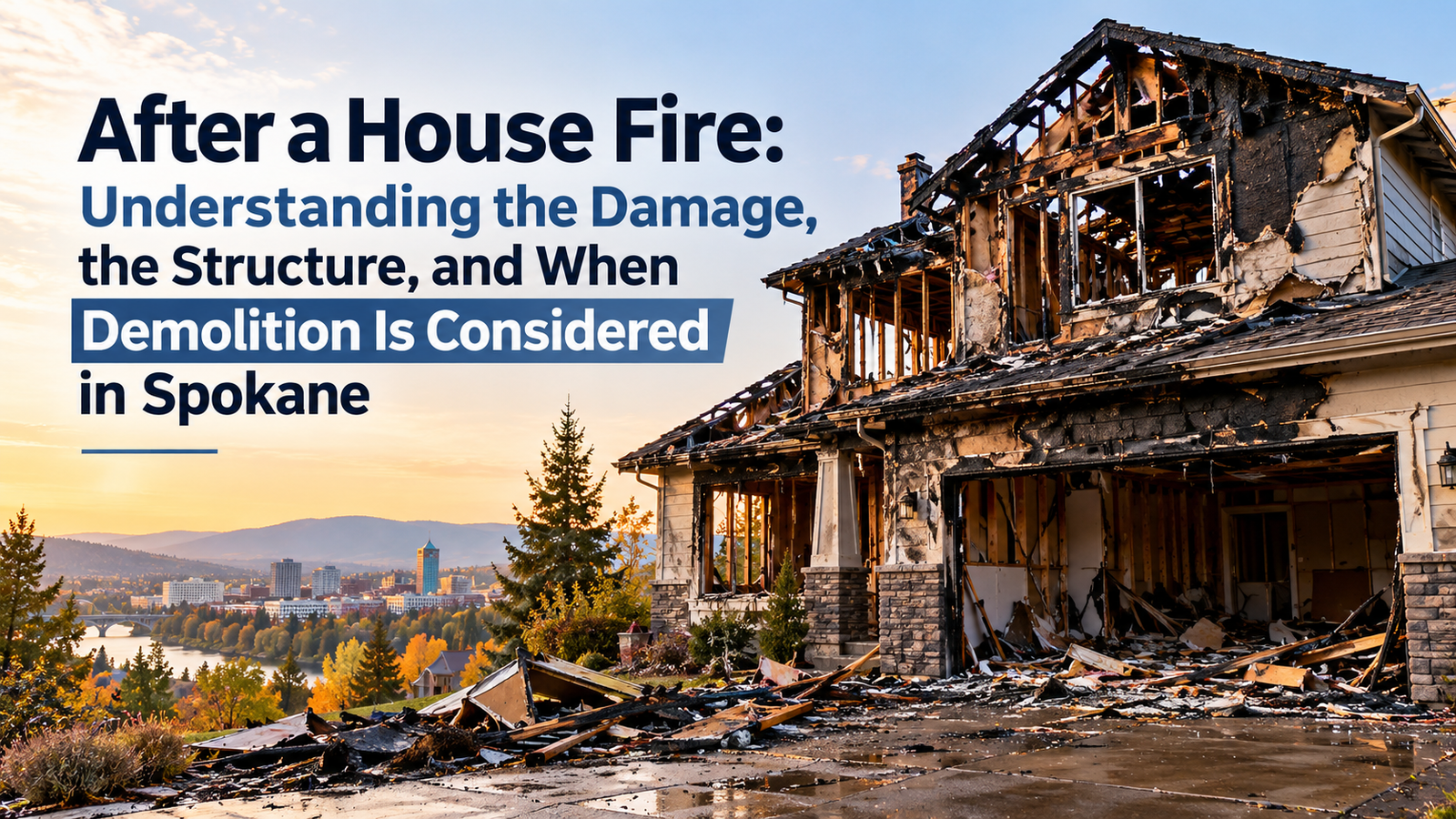
A house fire is one of the most disorienting events a household can experience. Even after the flames are out and the fire department has left, a long list of questions remains. Is the building safe to enter? What is damaged and what is not? Who has to be notified? What happens to the structure itself? In some cases, the answer to the last question is that the building can be repaired. In others, the damage is so extensive that removing the structure becomes part of the conversation.
This article offers general background about what happens after a House Fire Demolition Spokane, how damage is assessed, why fire affects a structure the way it does, what factors lead to a decision between restoration and demolition, and what safety and regulatory issues come up. It is set in Spokane, Washington, where the climate, building stock, and local agencies shape the process. It is general information rather than guidance for any specific situation, and anyone affected by a fire should rely on the fire department, building officials, and qualified professionals for direction on their own property.
The First Hours: Safety Comes Before Everything
Once the fire is out, the property is not automatically safe. Several hazards persist.
Structural instability. Fire weakens wood framing, floor joists, roof trusses, and connections. Charred members may look intact but have lost strength. Water from firefighting adds weight to floors and ceilings that may already be compromised.
Hot spots and rekindling. Smoldering material inside walls, attics, and insulation can reignite hours or days later. Fire departments often check with thermal imaging, and may return to monitor.
Utilities. Electrical systems may be damaged and energized. Gas lines may be leaking. Water lines may be broken. Utilities are generally shut off by the fire department or the utility company.
Falling debris. Ceilings, roof materials, and chimneys can drop without warning.
Hazardous materials. Burned buildings can release or contain contaminants, including soot, ash, asbestos in older materials, lead in old paint, and products of combustion from plastics and treated materials.
For these reasons, officials commonly restrict entry until a structure has been evaluated. In many cases, the building is posted with a notice that prohibits entry.
Who Gets Involved
A fire engages several parties, each with its own role.
The fire department. In Spokane, firefighters extinguish the fire, secure the scene, and in many cases determine the cause and origin. Investigators may examine the site, which means the property may need to remain undisturbed.
Building and code officials. The city’s building department evaluates whether the structure is safe and whether it can be occupied, and issues orders when buildings are unsafe.
Utility providers. Electric and gas providers disconnect and later restore service.
Insurance companies. Policy providers investigate, document damage, and determine coverage under the terms of the policy. Insurers often send adjusters and sometimes engineers.
Restoration professionals. Specialists address smoke, soot, and water damage, board up openings, and stabilize the property.
Environmental and health agencies. Where asbestos or other hazards may be present, regulations on testing and handling come into play. In Washington, the Spokane Regional Clean Air Agency has historically been involved in asbestos notification for demolition and renovation, and others may be involved depending on the case.
Mortgage holders and owners. Lenders often have a stake in the decisions about repair or removal.
How Fire Damages a Building
Understanding the mechanisms of damage helps explain why some structures can be saved and others cannot.
Direct Flame and Heat
Wood chars at its surface, and the char layer insulates the interior, so large timbers can retain strength even after burning. Light framing and engineered products, such as trusses and wood I joists, lose strength much more quickly. Metal connectors, steel beams, and fasteners can soften or warp in high heat.
Smoke and Soot
Smoke travels throughout a house, depositing soot and acidic residues on surfaces far from the actual flames. These residues stain, corrode metal, and leave odors that are hard to remove. Different fuels create different types of smoke, and plastics produce especially sticky residues.
Water
Firefighting uses large volumes of water. It saturates insulation, drywall, flooring, and framing, promoting mold growth within a day or two in warm, humid conditions. Water can cause as much damage as fire in some areas of a house.
Heat Effects on Other Materials
Windows crack and fall out, vinyl siding melts, plumbing made of plastic fails, and concrete may spall or crack when overheated. Masonry chimneys can be damaged and may be unsafe even when they appear intact.
Structural Effects
Loss of cross sections in framing, damage to bearing walls, collapsed floors and roofs, and displacement at connections can render a structure unsafe. Engineers evaluate these conditions.
The Damage Assessment
An assessment typically looks at several categories.
- Extent of fire damage. Which rooms and structural elements burned, and how deeply?
- Extent of smoke and water damage. What parts of the house are affected beyond the burn area?
- Structural integrity. Can the framing, foundation, and roof still carry their loads?
- Systems. Electrical, plumbing, and heating and cooling systems are checked for damage.
- Hazardous materials. Testing for asbestos, lead, and other contaminants where relevant.
- Code implications. What would be required to bring the building into compliance if repaired?
- Documentation. Photographs, notes, and reports support later decisions and insurance claims.
In cases of extensive damage, a structural engineer may inspect and prepare a written report.
Restoration or Demolition: The Factors
The decision is not a simple question of how much has burned. Several factors weigh into it.
Extent of structural damage. If load bearing members, the roof structure, or the foundation have been compromised, repair may involve rebuilding most of the structure.
Foundation condition. Intense heat can damage concrete and masonry foundations. If the foundation is sound, it can sometimes serve for reconstruction.
Safety of the remaining structure. A building that cannot be made safe to enter may need to be removed.
Age and construction type. Older homes may contain materials and framing methods that are harder to repair to current code. Newer lightweight construction can lose strength rapidly in fire.
Code upgrades. Repair work can trigger requirements to meet present day building and energy codes, which may be extensive in older structures.
Contamination. Heavy soot, smoke, or hazardous materials may make remediation impractical.
Insurance and ownership factors. Policy terms, mortgage requirements, and owner goals influence choices.
Official orders. When a structure is declared unsafe, the jurisdiction may require stabilization or demolition.
Both outcomes occur. Many fire damaged homes are repaired, while others are demolished and replaced.
What Demolition Involves in General Terms
When demolition is chosen, the process follows a recognized sequence. The details vary with the building and the rules in place.
- Authorization. The owner and any lender or insurer agree. Local authorities issue necessary permits.
- Utility disconnection. Electricity, gas, water, and sewer service are shut off and capped.
- Hazardous material survey. An inspection for asbestos and other regulated materials is generally required before demolition of structures, with notification to the relevant agency.
- Abatement. If regulated materials are found, they are removed by qualified personnel before the structure comes down.
- Site preparation. Access is secured, fencing is installed, and protection measures are placed for neighboring properties.
- Dust control. Water spraying and other methods limit airborne dust.
- Demolition. Machinery takes the structure down in a controlled way, and materials are sorted.
- Debris removal. Materials are loaded and taken to appropriate facilities.
- Foundation and basement work. Foundations may be removed or capped, and any basement is filled and compacted according to requirements.
- Final grading and stabilization. The site is graded, and erosion controls are installed.
- Closeout. Inspections and documentation are completed.
Asbestos and Other Hazards
Many homes built before the 1980s contain asbestos in some materials, such as insulation, flooring, roofing, siding, and joint compounds. Fire does not remove asbestos. It can disturb it and spread it through the debris. For that reason, regulations call for inspection and, where necessary, abatement before or during demolition and cleanup.
Lead based paint may also be present in older homes, and burned or demolished materials can release lead dust. Other hazards include chemical products stored in garages, treated lumber, batteries, propane tanks, and fire retardant residues. Heavy metals from burned electronics and plastics add to the mix. Because rules about notification, handling, and disposal are specific and change over time, anyone dealing with a fire damaged property should consult the relevant agencies.
Local Setting: Spokane
Spokane’s circumstances influence the post fire process in particular ways.
Climate. Eastern Washington has cold winters, snow, and dry summers. Winter fires leave exposed structures vulnerable to freezing and snow load. Summer fires occur in dry conditions where vegetation and wind affect spread.
Housing stock. Spokane has many older homes, including early twentieth century houses in neighborhoods such as the South Hill, Browne’s Addition, and Hillyard. Older houses may have lath and plaster walls, old wiring, and legacy materials, each influencing damage and repair decisions.
Regional wildfire exposure. The Spokane area experiences wildfire smoke and, at times, fires in the wildland urban interface. Property damage from wildfires involves additional considerations such as defensible space and ash.
Utilities and services. Avista supplies electric and natural gas service to much of the area, and local water and sewer departments handle those utilities.
Regulatory framework. The City of Spokane’s building and planning departments and regional agencies handle permits and notifications. Requirements for demolition permits, hazardous material surveys, and site conditions are set by local and state authorities, so owners should confirm current rules.
Winter site stabilization. Demolition and cleanup during freezing weather bring challenges for dust control, grading, and ground conditions.
Neighbors and Surrounding Property
Fire and demolition affect people nearby. Several considerations arise.
- Adjacent structures. Heat and fire can damage neighboring buildings, and demolition must avoid harming them.
- Dust and noise. Mitigation and communication reduce disruption.
- Property lines and fences. Boundaries should be respected during site work.
- Trees and landscaping. Mature trees near a fire may be damaged and need evaluation.
- Access and street use. Truck traffic and dumpsters require planning, and permits may apply to street occupancy.
Emotional and Practical Realities
Beyond the technical side, a fire leaves people dealing with loss, disruption, and uncertainty. The decision about a damaged home is often entangled with grief about belongings and memories. Support from family, community organizations, and professionals can be important. Practical steps, such as documenting losses, securing important documents, and arranging temporary housing, are commonly part of the early response, and guidance is available from agencies and relief organizations.
Common Misunderstandings
“If the walls are still standing, the house can be saved.” Standing walls may be structurally compromised, and smoke and water damage are often extensive.
“Demolition is always the first step.” Many fire damaged homes are restored. The decision follows assessment.
“Smoke damage is only cosmetic.” Soot and residues can be corrosive and carry health concerns.
“It is safe to enter once the fire is out.” Hidden hazards persist until the structure is evaluated.
“Asbestos only matters in demolition.” It also matters in cleanup and repair, since fire can disturb it.
“The insurance company decides everything.” Insurers evaluate claims, but safety, code, and ownership decisions involve other parties too.
Frequently Asked Questions
What should happen immediately after a house fire?
Safety comes first. Generally people wait for the fire department to declare the area safe, avoid entering damaged structures, and contact their insurer and relevant authorities.
How is a fire damaged house evaluated?
Fire officials and building officials assess safety, and engineers or restoration professionals evaluate structural, smoke, and water damage.
When is demolition considered?
When structural damage is severe, the foundation is compromised, hazards make repair impractical, or officials declare the building unsafe.
Can a house be rebuilt after a fire?
Often, yes, using the foundation and undamaged parts when sound, though repairs may need to comply with current codes.
Does fire damaged construction contain hazardous materials?
Older buildings may contain asbestos and lead, and fire can release combustion byproducts. Testing and proper handling are standard steps.
Who investigates the cause of a fire?
Fire departments and, in some cases, insurance investigators or specialists determine the cause and origin.
Can I enter my house after a fire to retrieve belongings?
Typically only with permission from officials, and sometimes with escort or protective gear. Unsafe structures may be off limits.
Why is smoke damage so hard to remove?
Smoke deposits residues that penetrate porous materials and can corrode metals, so complete removal requires specialized cleaning.
What happens to the land after demolition?
The site is graded and stabilized. Owners may rebuild, sell, or leave it for later decisions.
Final Thoughts
After a house fire, the structure becomes a question that must be answered with evidence. Safety assessment comes first, damage evaluation follows, and the choice between restoration and demolition grows out of structural condition, hazards, regulations, and the goals of the people involved.
For readers seeking background on house fire demolition in Spokane, the central idea is that demolition is one possible outcome of a careful process rather than an automatic one. Spokane’s older housing stock, climate, and regulatory framework all shape that process, and understanding the steps makes an overwhelming situation easier to follow.